
Norrington Family
Thomas Stanley Norrington (1815-1884)
The first Norrington recorded in Borden was Thomas Norrington with his marriage to Keturah Earll on 7th May 1837 in Borden Church. Thomas was born in Doddington, and Keturah in Bredgar, both about 1815. The Census from 1841 to 1881 record he was a Miller and lived in Chalkwell and Mill House. Thomas died on 26th October 1884 and Keturah on 10th February 1896. Thomas and Keturah had seven children; Edward (1835-1909), Ann (1838-1892), Mary Ann (1843-1899), Thomas Stanley (1846-1914), Keturah (1848-1931), Charles Douglas (1851-1907), Charlotte Amy (1853-1905), and George (1856-1931).
Charles Douglas Norrington (1851-1907)
Charles is recorded as born in Borden, though he was baptised on 16th February 1851 in St Michael’s Church in Sittingbourne. He married Charlotte Emma Barrett, from Rodmersham, on 3rd September 1876 in Borden Church. In 1891 he was living at 24 Mill Lane, next door to his widowed mother and followed his father as a miller. In 1901 he was living in Borden Lane and Charlotte was recorded living there in 1911 and 1921. Charles died on 30th November 1907 and buried in Borden churchyard, and Charlotte died in 1929.
Charles and Charlotte’s children were; Charlotte Edith (1877-1927), Henrietta (1879-1961), Gertrude Mabel (1882-1969), George (1886-1964), Bertie (1891-1961), Frank (1893-1916), Charles Douglas (1895-1917), Kathleen (1888-1961), Gladys Beatrice (1899-1978), Charlotte Amy (1853-1905), and Alma (1903-1988).
Frank Norrington (1893-1916)
Frank was killed in the First World War, aged 23, on 15th September 1916 in France.
He enlisted with the 1st Battalion, East Kent Regiment (The Buffs) and disembarked in France on 1st June 1915.
Frank is buried in Guillemont Road Cemetery, France. He is commemorated on Borden’s War Memorial.
Charles Douglas Norrington (1895-1917)
Charles was also killed in the First World War, aged 21, on 29th October 1917. He is also commemorated on Borden’s War Memorial.
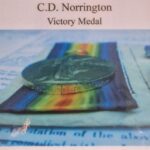
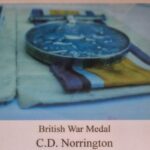
The Borden Heritage Group has acquired his First World War medals which were posthumously presented to his widowed mother.
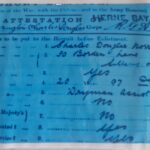
By the time he enlisted “for the duration of the war”, he was a dryman assistant in the paper mill. Charles was a tall slim unmarried
young man of six feet one inch. He was 20 years and 97 days of age. (Army records were exact).
His Army documents indicated that he still lived at 30 Borden Lane when he enlisted at Sittingbourne, Kent on 19th February 1916. He
was posted to the 15th Siege Battery of the Royal Garrison Artillery with the rank of Gunner and the Regimental Number 79351. On the 3rd of September 1916 he was posted from No.2 Depot on the Royal Garrison Artillery to the British Expeditionary Force in France.
A little over a year later, on 29th October 1917, he died of his wounds in a field hospital in the France/Flanders theatre of the First
World War. He was buried at Potijze Chateau Lawn Cemetery. His widowed mother still lived at 30 Borden Lane. She died in March 1919 having moved from the
area.
First World War service records are scarce, as over 60% were burned in an air raid during the Second World War. However, in the case of Charles Douglas Norrington his service record is intact.
Also, the ribbons of Charles’ Victory and British war medals, which were given to his mother, are in pristine original colours and have been kept in their original envelopes.
© Keith F. Lainton
George Norrington (1885-1964)
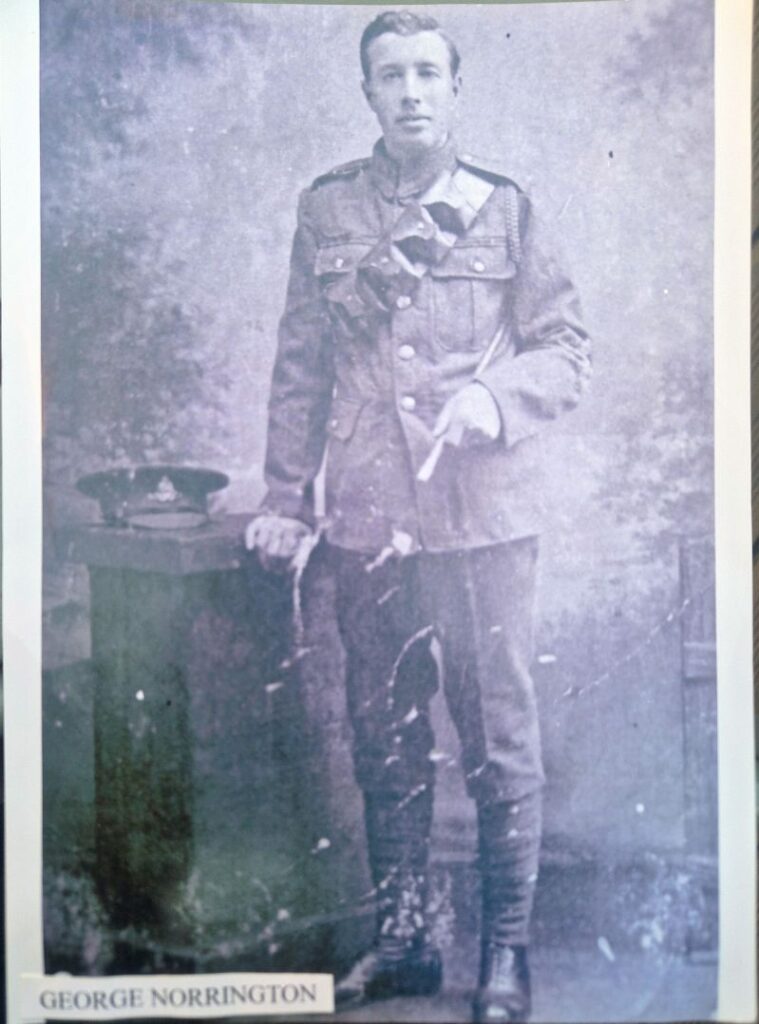
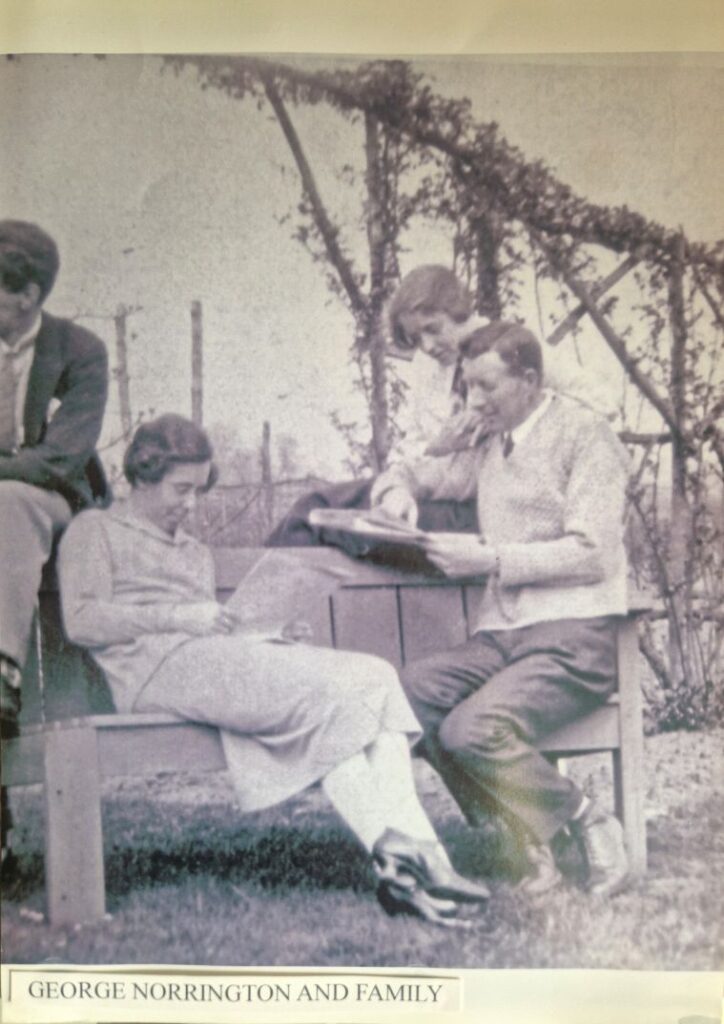
The photographs left and right are believed to be Frank and Charles’ brother George.
George was born in 1885 in Borden, and married Emma Thomas in 1915 in Milton Regis district.
Records show that he was a Corporal with the Royal Garrison Artillery.
The 1939 Register records they were living at 33 Borden Lane and he was employed as an Ironmongers Manager, the 1921 census recorded he was an ironmonger’s assistant working at Webbs in East Street, Sittingbourne.
He died on 15th February 1964 and at the time was still living at 33 Borden Lane. His wife died in 1968.
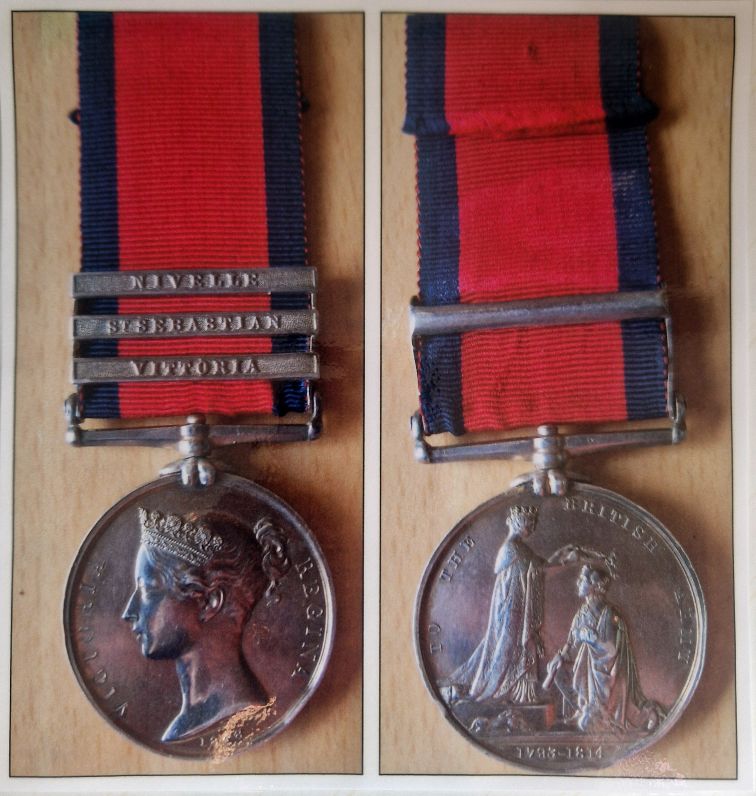
Peninsular War Medal
This campaign medal was presented to the ancestor of a family who lived in Borden Hall, for service as an army lieutenant in the Peninsular War against Napoleon’s armies. Leading the British army was one of the greatest English Generals, the Duke of Wellington, who won the Battle of Waterloo. The ‘Young Head’ of Queen Victoria is depicted on the front of the medal. The names on the bars indicate the battles served in, Nivelle, St Sebastian, and Vittoria.
Peninsular War (1807-1814)
The first serious revolt against Napoleon’s empire was in Spain and Portugal. This provided the venues for England’s army in its successful attempt to drive the formidable French army back to the north of the Pyrenees. This small English army worked well in conjunction with the local resistance groups, to keep a large French army pinned down in Spain, due in no small measure, to the genius of a great commander, Arthur Wellesley. He showed great Military and diplomatic skill which helped greatly in securing the commitment of Spanish and Portuguese forces to work against Napoleon’s occupation force. Spain, influenced by Godoy, an advisor of Queen, had joined with the French to attack Portugal. Portugal was one of the few countries still trading with England and not implementing the trade embargo ordered by Napoleon. It also provided strategic harbours for the English fleet. Thus, the war had both military and commercial benefit the nineteenth century England. Wellesley used the famous tactic of the “thin red line” against the columnar tactic of the occupying French and proved it superiority at the battle of Vimiero. This lesson of the Peninsular was redeployed at the Battle of Waterloo, some years later.