
How the Playstool was Saved for Borden
This article by Helen Allinson was published in Sittingbourne Heritage Museum’s Quarterly Journal September 2021.
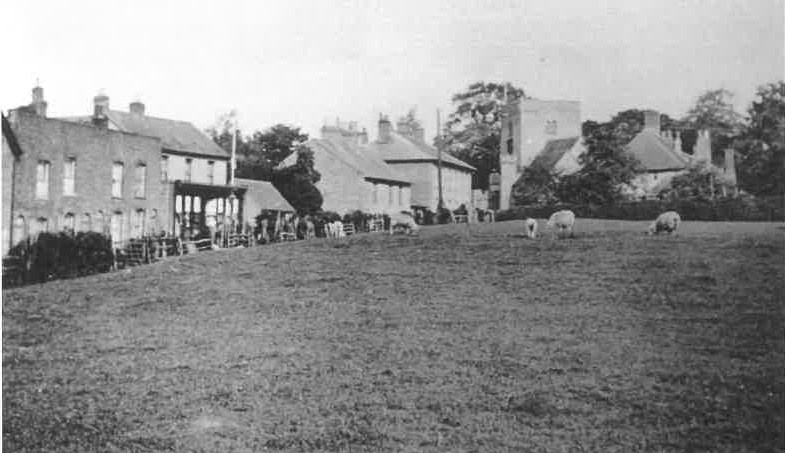
As we all know Borden is blessed with a delightful public open space – the Playstool. A great asset for local people where children can play, dogs can be walked and people can sit and admire the view across to the island. All this would have been lost in 1929 had it not been for the determination of the parish councillors who went so far as to pull down a fence themselves to maintain the right of the parish to the land.
A piece of the Playstool had been sold and fenced in, and the purchaser, Sittingbourne dentist John Roberts, had acquired the disputed land in a perfectly legal way. So he declined to remove the fence as requested by the
council. One summer evening in 1929 members of the council could be seen pulling the fence up. Chairman of the parish council then (1928) was C. Bishop, others were Alfred Tidy, Alfred Hinge, William Goodhew, A. Williams, F. Kemsley, Kenelm Edwards and Lewis Levy of Borden Hall who was acting as legal advisor to the council.
The parish raised loans from the Kent Playing Fields Association to buy the land. By the end of November it could be announced in the parish meeting that Wills and Packham Ltd, the owners of the land in question, had refunded the £75 to Mr Roberts. Further, Wills and Packham had agreed to hand over the Playstool in its entirety to the parish at the reasonable price of about £250. The company maintained the right to take brick earth from Mr Robert but would have to do so within ten years. What is now the lower part of the Playstool is so much lower because brick earth was dug from it by Wills and Packham. In 1949 the lower Playstool was filled in and purchased by the parish for sport and games.
And so everything was settled to the great satisfaction of the villagers. As the East Kent Gazette reported ‘The memories of the past that cling to the Playstool will be an incentive to the parish council to faithfully guard and preserve their precious freehold.’
Playstool is an ancient field name, quite common in Kent. There is one at Newington and another at Bredgar. Playstools were the places where miracle or mystery plays took place in the Middle Ages. Until the 13th century, religious dramas were often staged in the churches, later they were relegated to the fields. Borden’s Playstool is very close to the church in the centre of the village, which would be why it was chosen.
For centuries after the Reformation had put an end to such plays the Playstool was grazed by sheep. An annual sheep sale was held there during the 19th century. So when the parish council decided to make it a playing field and park the Clinch family had to be given notice. Then the Playstool became once again the natural centre for big village events as it remains today.